English| EUR
Suggested for you
More currencies
Choose a language
Amish dinner recipes reflect generations of farm-to-table simplicity, built around seasonal ingredients and minimal waste. Meals are served family-style in private homes, where guests sit at communal tables and share dishes passed down through oral tradition. Reservations are required; these are not public restaurants but invitations into working farmsteads.
Quick answer
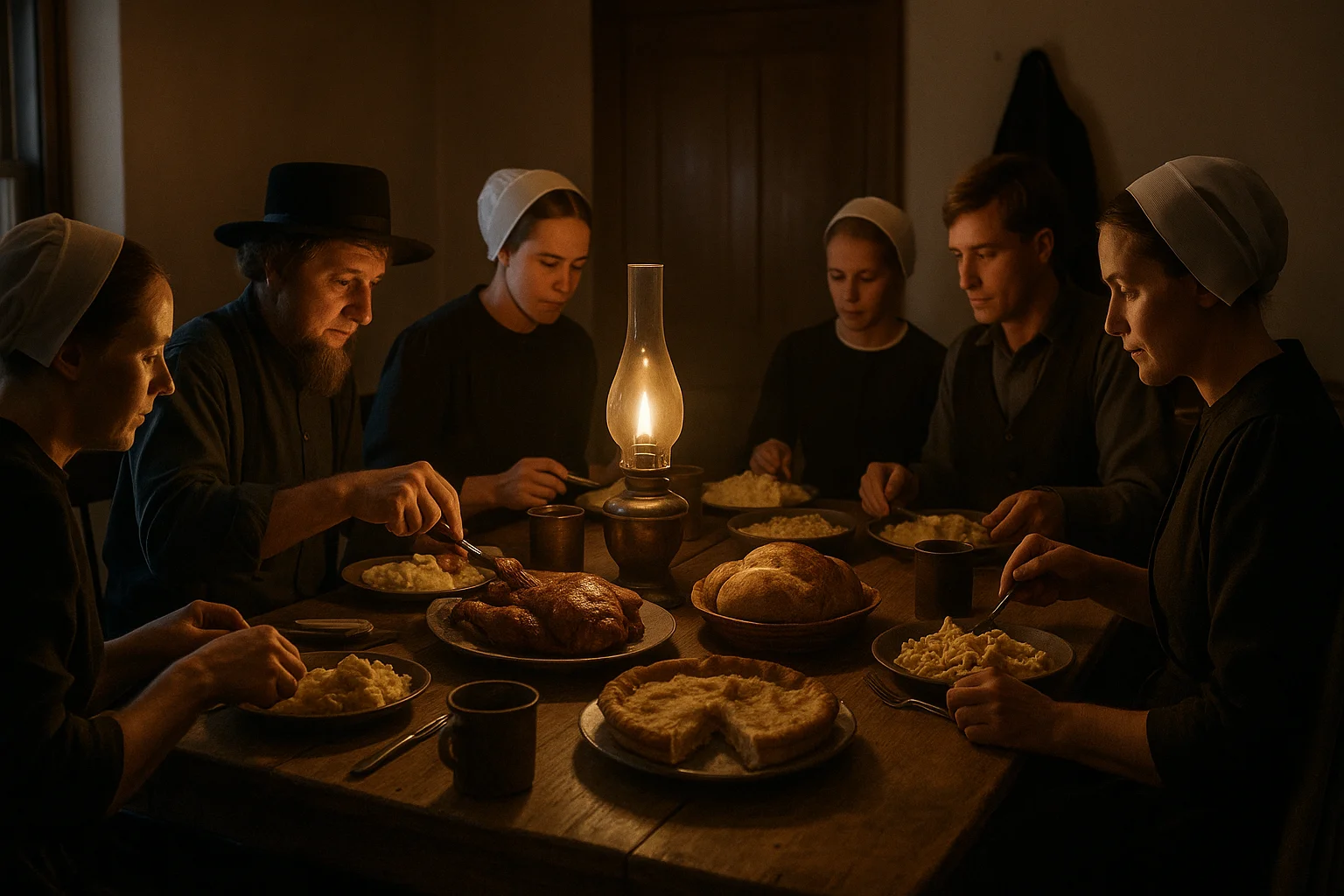
Amish recipes for dinner center on roasted chicken or pot roast, mashed potatoes, buttered noodles, green beans, homemade bread, and fruit pies. Meals are prepared without electricity using wood-fired stoves and root-cellar vegetables. Portions are generous, recipes use lard and butter rather than processed oils, and every dish is made from scratch the day of service. Menus vary by season and household, but the format remains consistent: protein, starch, vegetable, and dessert served family-style at long tables.
Every Amish dinner begins with a silent grace and ends with pie—apple, shoofly, or cherry depending on the month. These are not performances or theme dinners; they are working meals in active households where the kitchen has fed a family of eight every day for decades. The recipes have no written measurements. A grandmother's muscle memory guides the dumpling dough; the roasting time for chicken is judged by color and aroma, not a timer. Typical Amish recipes for dinner include roasted or fried chicken, beef pot roast, or ham, paired with mashed potatoes made with real cream and butter, buttered egg noodles, and green beans slow-cooked with bacon. Bread is baked that morning in a wood-fired oven. Desserts rotate with the harvest: strawberry shortcake in June, peach cobbler in August, pumpkin pie in October. Canning and preserving define the winter menu; pickled beets, corn relish, and bread-and-butter pickles appear on every table. There are no substitutions, no dietary customizations, and no reheated leftovers. Meals are served between 5:00 and 7:00 PM, the window that follows afternoon fieldwork. Guests sit at long tables with the family, and dishes are passed in succession—no plating, no coursing, no menu cards. Conversation is quiet and polite; hosts answer questions about the food but do not narrate the meal. The kitchen itself is off-limits; food arrives fully prepared. Payment is handled discreetly at the end, and reservations are confirmed by phone or through a local coordinator, never online. The experience is domestic, not commercial. Homes are plain—no photographs on walls, no electric lights, no music. The dining room smells of woodsmoke, yeast, and rendered fat. Plates are mismatched, silverware is heavy, and water is poured from glass pitchers. The meal lasts roughly ninety minutes, unhurried but not lingering. Guests leave with a sense of having been hosted rather than served, a distinction that defines the entire tradition.
“The recipes have no written measurements—a grandmother's muscle memory guides the dumpling dough, and roasting time is judged by color and aroma, not a timer.”
The best arrival window for experiencing traditional Amish dinner recipes is 17:00–19:00. This timeframe aligns with the natural rhythms of local households and ensures guests are present for the meal service.
Mild, 55°F to 70°F
Gardens begin to bloom and seasonal produce enters the kitchen. Reservations are generally easier to secure before the peak summer season.
Warm, 75°F to 85°F
Fresh vegetables like corn and tomatoes are highlights of the dinner menu. Expect higher travel volumes in Lancaster and Holmes County.
Cool, 50°F to 65°F
Harvest season brings robust, traditional recipes to the table. The cooling weather makes for comfortable evening travel.
Cold, 25°F to 40°F
Many recipes focus on hearty, preserved ingredients and comfort foods. Fewer visitors are present, offering a quieter experience.
Verdict: The best time to visit is during the shoulder seasons of May or October, arriving strictly within the 17:00–19:00 window for your scheduled dinner.
Booking a dinner experience in an Amish home requires advance planning, as these are private reservations rather than walk-in restaurants. The entire process from initial inquiry to confirmation typically takes three to seven days.
Start by identifying tour operators or families in Lancaster, PA or Holmes County, OH who offer hosted meals. Not all Amish households participate, so work through verified booking channels rather than approaching homes directly.
Reach out by phone or through the operator's website at least two weeks before your preferred date. Email is rarely monitored by Amish families themselves, so expect phone-based communication for direct bookings.
Provide an exact headcount and flag any allergies or restrictions early. Traditional menus are planned days ahead, and last-minute changes are difficult in homes without commercial kitchen flexibility.
Once the host agrees, you'll receive the meal date, arrival window (typically 17:00–19:00), and precise directions. Amish homes lack street numbers in some areas, so note landmark-based instructions carefully.
Plan to reach the property within the ten- to fifteen-minute arrival window you were given. Amish schedules revolve around daylight and farm routines, so late arrivals disrupt preparation that began hours earlier.
Dining in an Amish home is a private cultural exchange that requires modesty and respect. Familiarizing yourself with community norms ensures a comfortable experience for both your family and your hosts.
Everything you need to know about amish recipes for dinner
Traditional Amish cooking focuses on farm-to-table ingredients like garden vegetables, slow-roasted meats, and handmade noodles. These amish recipes for dinner emphasize communal dining and simple, hearty preparation methods rooted in agrarian culture.
You can arrange to experience these culinary traditions through private reservations in Lancaster, PA, or Holmes County, OH. Each location offers a unique opportunity to taste local cooking, though the availability of amish recipes for dinner depends entirely on securing a private booking.
There is no public entrance fee because these are not commercial attractions. These dinner experiences are private reservations made directly with families or established community hosts.
The best arrival window for these traditional home-cooked experiences is between 17:00 and 19:00. Arriving during this period ensures your meal aligns with the typical schedule for home-prepared, authentic food.
Many families welcome children, provided they respect the quiet and orderly nature of the household. When planning to enjoy amish recipes for dinner with your family, verify child-friendly options during the reservation process.
Respecting the privacy of the community is essential, so please do not take photographs of people or their homes without explicit permission. Additionally, remember that these are private residences rather than restaurants, so maintain a polite and humble demeanor throughout your visit.
Shipshewana Amish Dinner Prices
Read more GuideWhat is a Typical Amish Dinner?
Read more GuideGuide to Amish Dinner Menus
Read more Tickets & toursDinner with an Amish Family in Lancaster, PA
Read more GuideDinner with an Amish Family in Ohio
Read more GuideAmish Family Dinner in Shipshewana Indiana
Read more