English| EUR
Suggested for you
More currencies
Choose a language
Amish dinners are rooted in farm-to-table simplicity and communal tradition, built around dishes that have fed generations of Pennsylvania families. These meals reflect seasonal harvests, preserved ingredients, and recipes passed down without written instruction. Understanding what defines a typical Amish dinner means looking at the structure, ingredients, and rituals that shape the evening meal.
Quick answer
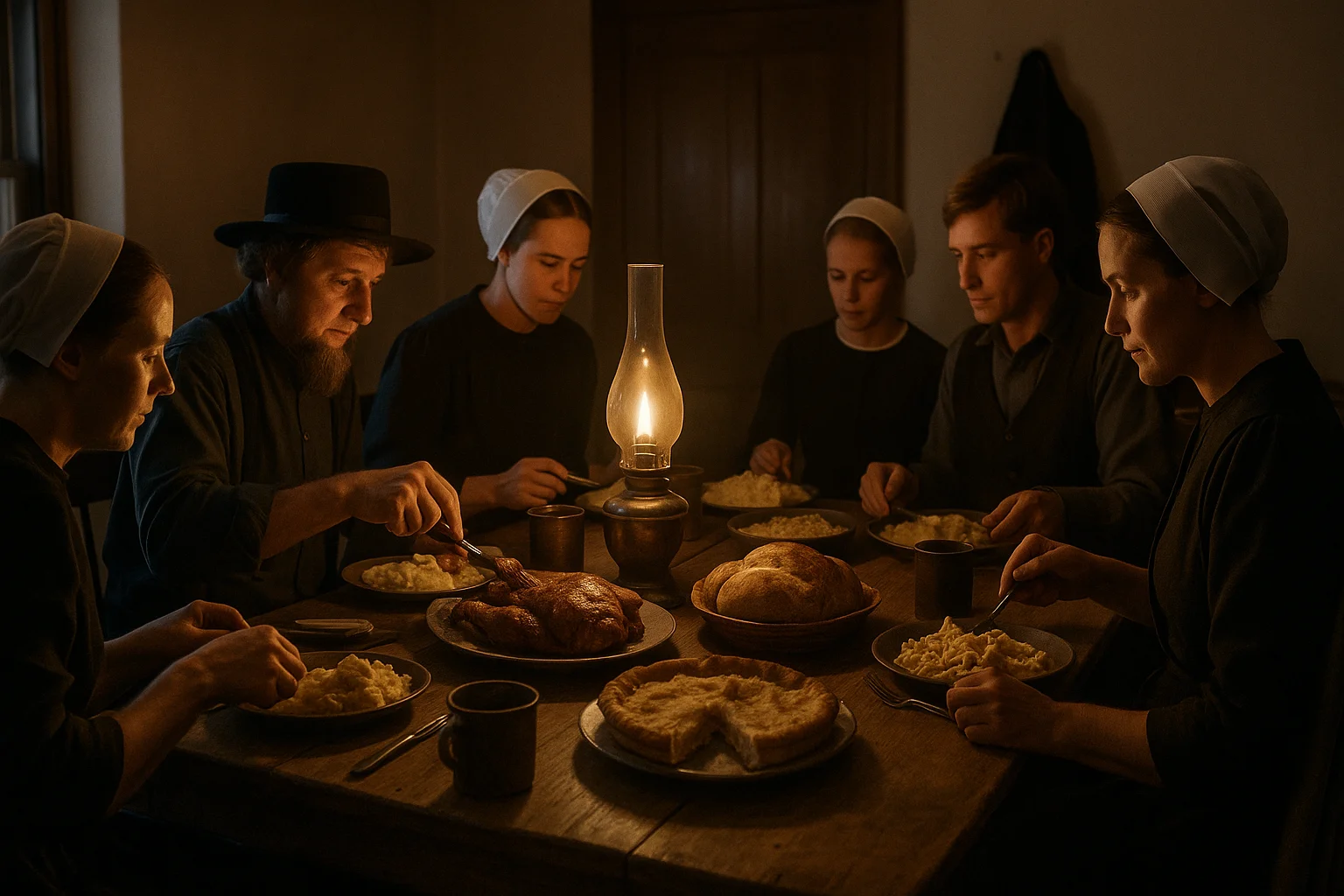
A typical Amish dinner centers on hearty, slow-cooked dishes served family-style: roast chicken or ham, mashed potatoes, buttered noodles, green beans, coleslaw, homemade bread, and fruit pie. Meals are prepared without electricity, using wood-fired stoves and root-cellar ingredients. Dinner is the main meal of the day, served in the early evening after farm work concludes, with everyone seated at a shared table.
The Amish dinner table carries no printed menu and follows no rigid recipe card. Every dish reflects what the season offers and what the household preserved months earlier. Root vegetables stored since autumn appear alongside freshly baked bread. Meat comes from animals raised on the property. Butter, cheese, and cream are drawn from the family dairy herd. This is subsistence cooking elevated by repetition and care. What is a typical Amish dinner in practice? The centerpiece is often roast chicken, baked ham, or beef pot roast, accompanied by mashed potatoes whipped with butter and cream. Buttered egg noodles, a Pennsylvania Dutch staple, sit alongside green beans slow-cooked with bacon or onion. Coleslaw dressed in a sweet-and-sour vinegar base provides crunch. Chow-chow, a tangy pickled relish made from end-of-season garden vegetables, appears in a small bowl. Bread arrives warm, sliced thick, with apple butter or church spread—a marshmallow-peanut-butter hybrid unique to the region. Dessert is shoofly pie, a molasses-rich pastry, or fruit pie filled with preserved peaches or cherries. Family-style service defines the meal's structure. Platters and bowls circulate around a long table, and diners serve themselves. Conversation is minimal during the meal itself; the focus remains on the food and the act of gathering. Meals begin and end with silent prayer. Children eat alongside adults, and the table accommodates extended family or neighbors who arrive unannounced. There is no menu variance for preference—what is served is what is eaten. The cooking methods shape the flavors. Wood-fired stoves produce uneven, radiant heat that caramelizes roasted meats and gives bread a dense, golden crust. Canning and fermenting preserve summer abundance through winter. Lard replaces vegetable oil. Sugar and salt season generously. These are not delicate preparations; they are built to sustain long days of physical labor. The result is filling, flavorful, and deeply tied to place and routine. Amish dinners are not performances—they are private household rituals shaped by necessity and continuity.
“Every dish reflects what the season offers and what the household preserved months earlier.”
Amish culinary traditions prioritize scratch-made, farm-to-table ingredients that reflect the agricultural heritage of the community. Meals typically feature substantial, nutrient-dense portions designed to sustain families engaged in manual labor.
A traditional table includes a variety of relishes, pickled vegetables, and preserves, offering a balance of sweet and tart flavors alongside the main course.
Common main dishes include roast beef, baked chicken, or ham, often prepared using traditional slow-cooking methods.
Starchy sides such as mashed potatoes, often served with rich, pan-made gravy, serve as a staple accompaniment to most dinner meals.
Vegetables are sourced directly from home gardens, emphasizing freshness and seasonal availability for sides like green beans, corn, or peas.
Dinner typically includes freshly baked white or wheat bread, often served with homemade butter or fruit spreads.
Cooking styles are heavily rooted in Pennsylvania Dutch heritage, focusing on simple, wholesome ingredients prepared without processed additives.
Meals frequently conclude with traditional desserts such as shoofly pie, apple pie, or cream-based pies made from scratch.
Amish dinners take place in private homes where religious values and community traditions shape every interaction. Respectful conduct honors your hosts and preserves the trust that makes these invitations possible.
Visitors in Amish Country encounter a split between large-scale commercial eateries serving traditional-style cuisine and private, home-hosted meal experiences. Understanding these options helps align expectations with the reality of local hospitality.
restaurant
A long-standing commercial venue in Ronks offering large-scale buffet service modeled on traditional recipes.
restaurant
Located in Bird-in-Hand, this venue provides family-style dining service for larger groups in a commercial setting.
home-hosted
Private dining experiences arranged through specific local organizations or hosts that occur within actual Amish residences.
market
A collection of food shops and eateries in Intercourse that offers access to regional staples and prepared goods.
Amish dinners are private home experiences, so advance coordination and respectful preparation ensure a smooth visit.
Everything you need to know about what is a typical amish dinner
A typical Amish dinner features home-cooked, farm-to-table recipes such as roast beef, mashed potatoes, buttery noodles, and shoofly pie. These meals emphasize locally sourced produce and communal dining traditions in Amish Country, Pennsylvania.
Because these meals occur in private homes, you should look for local booking partners who facilitate these experiences. Since they are private events, availability varies and requires advance arrangements through established visitor services.
Guests often find that what is a typical amish dinner offers a quiet, respectful atmosphere centered on fellowship and home-style hospitality. It is a slow-paced, authentic way to learn about the culture through shared food.
Families are generally welcome, but it is important to confirm policies with your booking host beforehand. These dinners provide a unique educational opportunity to teach children about simple living and agricultural heritage.
There is no fixed entrance fee as these are private, home-cooked experiences rather than public attractions. Costs are typically bundled into a reservation package managed by authorized local tour operators.
To understand what is a typical amish dinner, you should arrive with an open mind and respectful demeanor. Prepare for a modest setting that prioritizes community and conversation over modern distractions.
Shipshewana Amish Dinner Prices
Read more GuideTraditional Amish Dinner Recipes
Read more GuideGuide to Amish Dinner Menus
Read more Tickets & toursDinner with an Amish Family in Lancaster, PA
Read more GuideDinner with an Amish Family in Ohio
Read more GuideAmish Family Dinner in Shipshewana Indiana
Read more